At first I was only attracted by the brutalist National Theatre. I liked its huge and heavy building blocks. I accidentally discovered this staircase after I had admired the entire exterior of the theatre.
This staircase is located in the most conspicuous position at the entrance of the square, but people on the roadside just pass by in a hurry. No one has ever stepped into it during the period of my observation, so I was full of curiosity about this staircase.
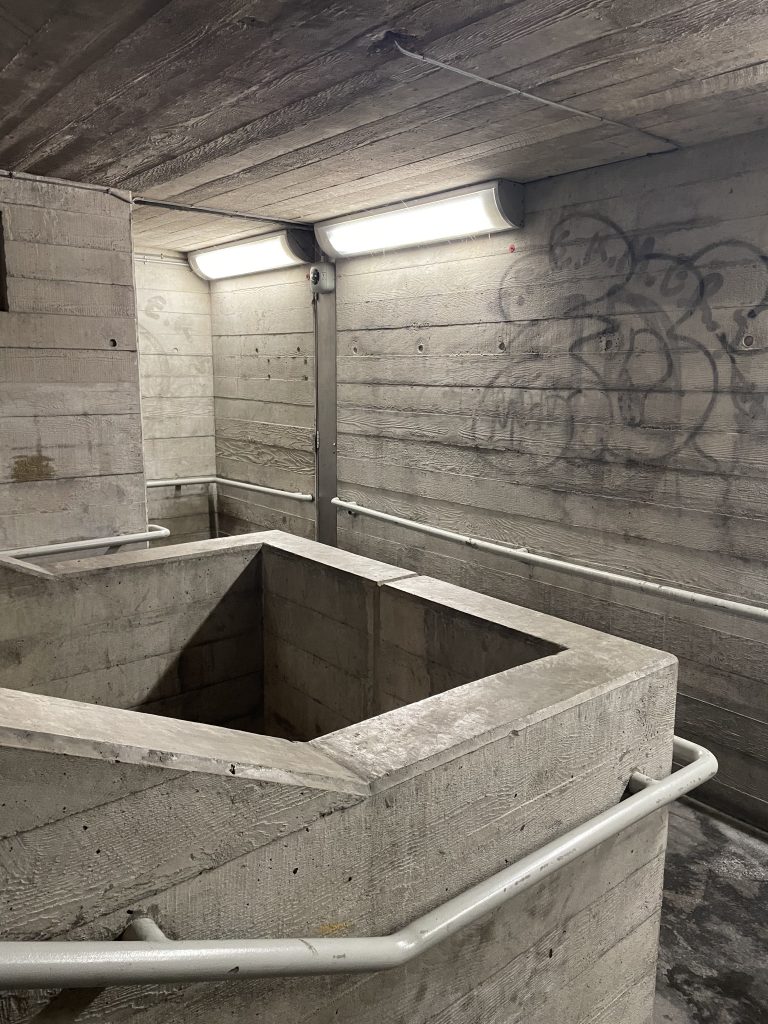
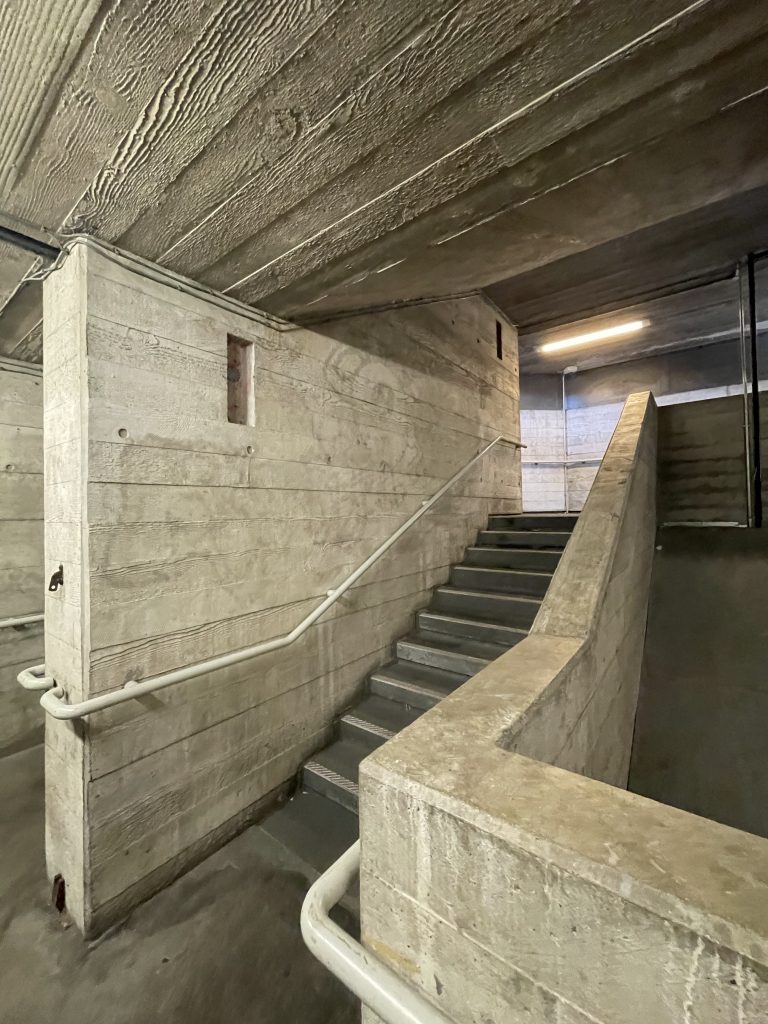
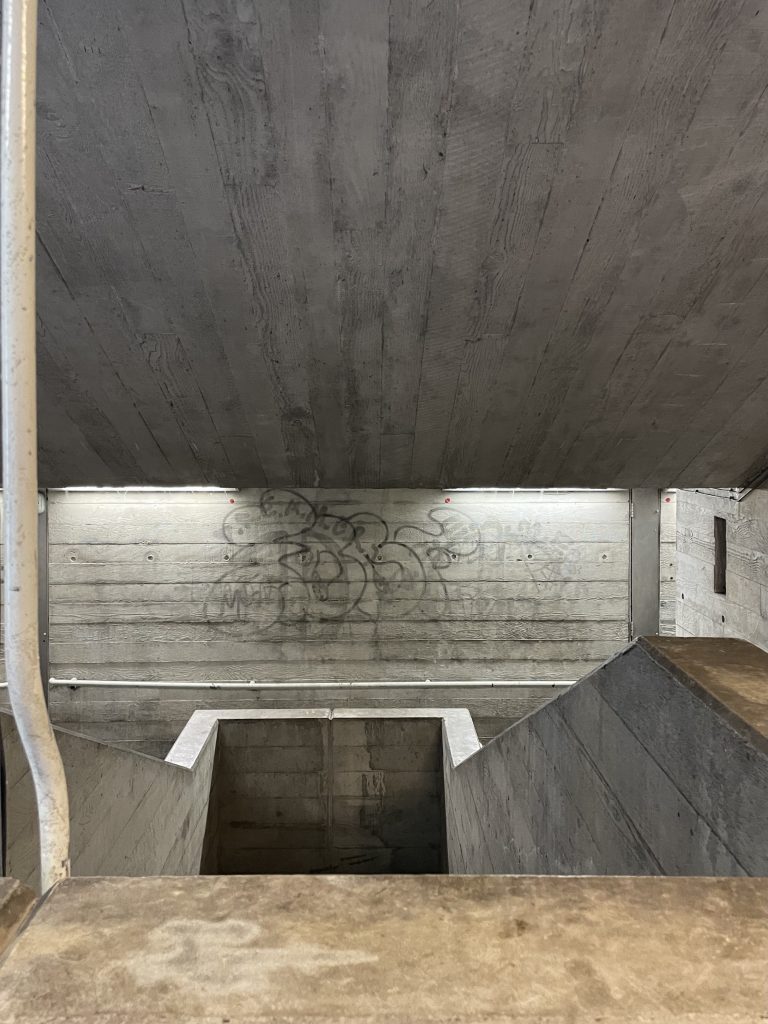
Through investigation , I discovered that this staircase carries a wealth of both human and non-human traces. These traces not only record the daily activities of countless individuals but also bear the marks of time and nature. Documenting and interpreting these traces allows me to gain a deeper understanding of the relationship between human activities and environmental changes.
So first I recorded these two types of traces through photography.
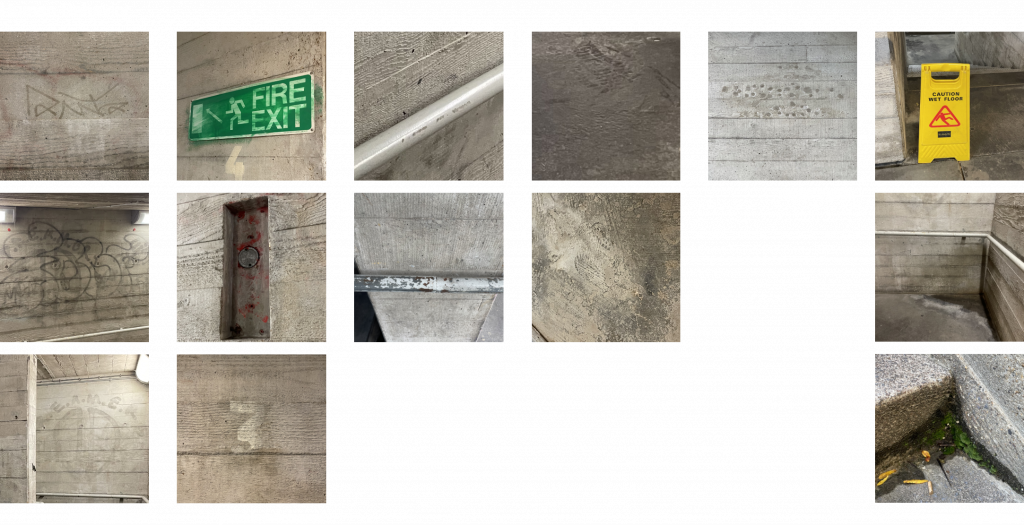
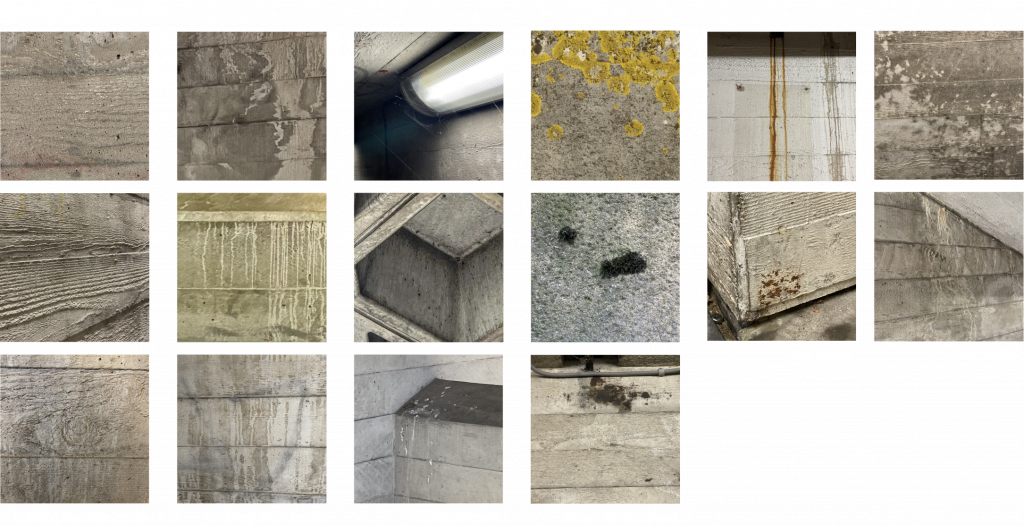
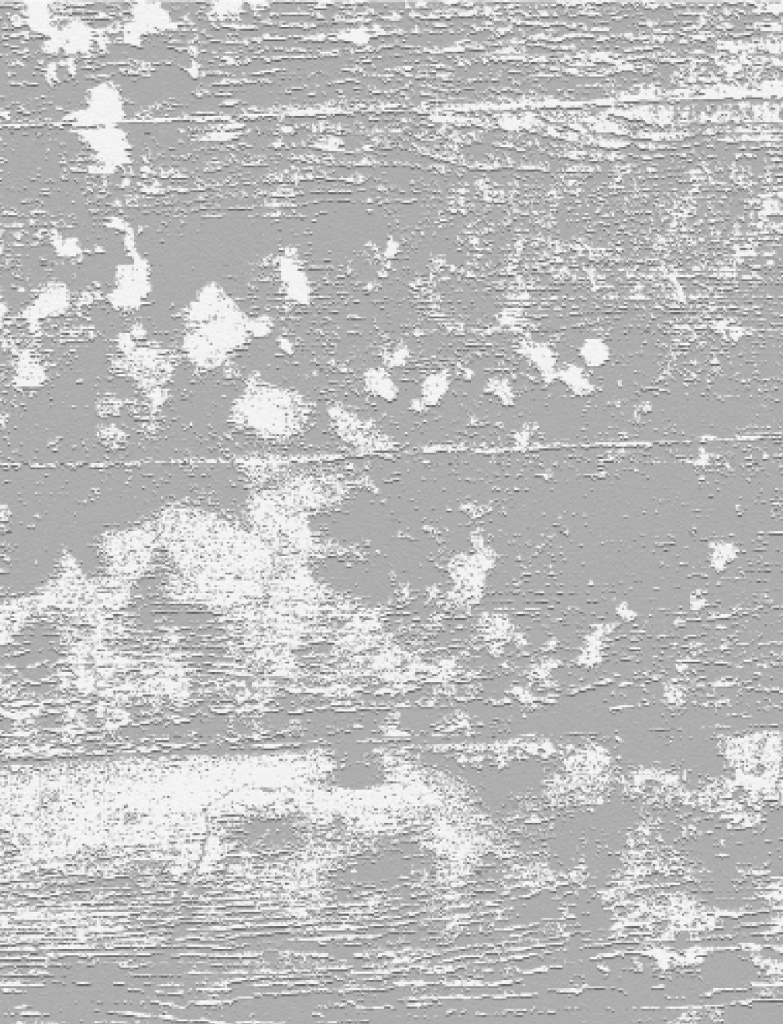
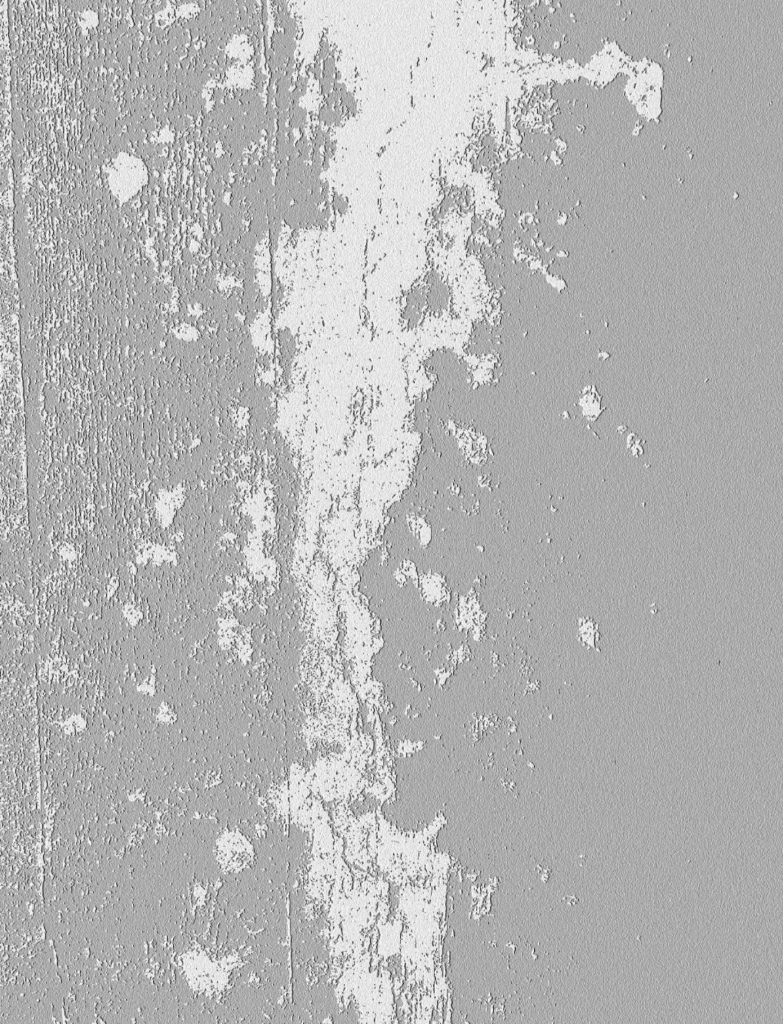
Then in order to capture the direct tactile sense of spatial traces in depth, I chose rubbing to record the subtle textures and shapes on the wall surface, enhancing the perception of spatial characteristics through vision and touch.
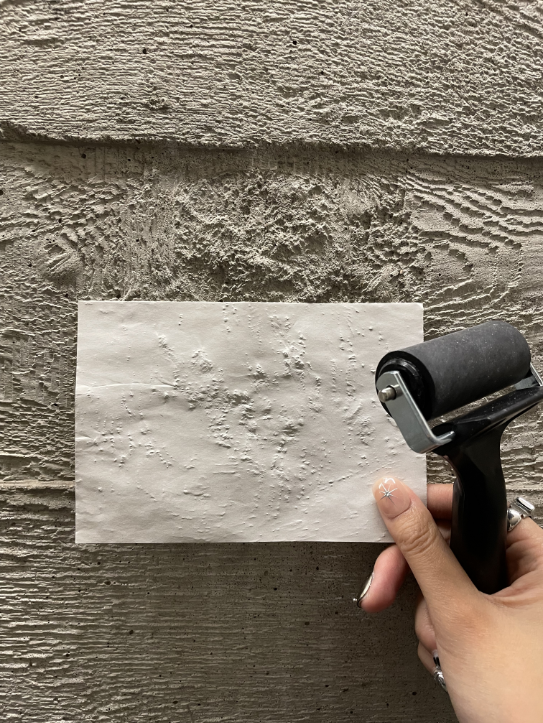
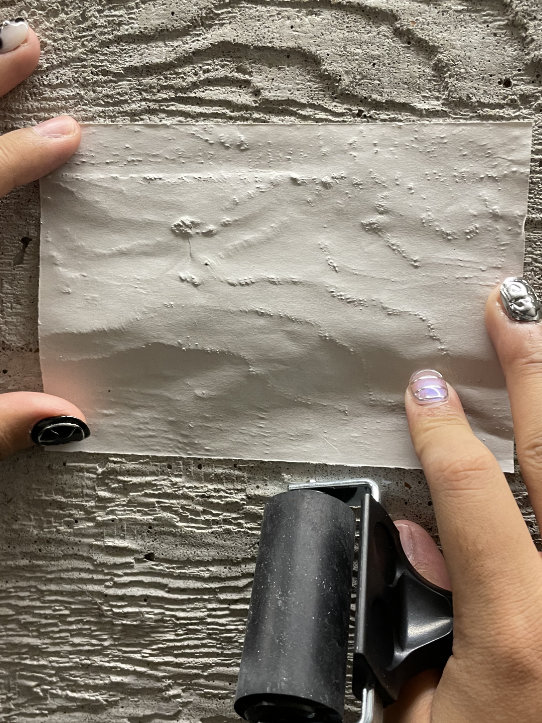
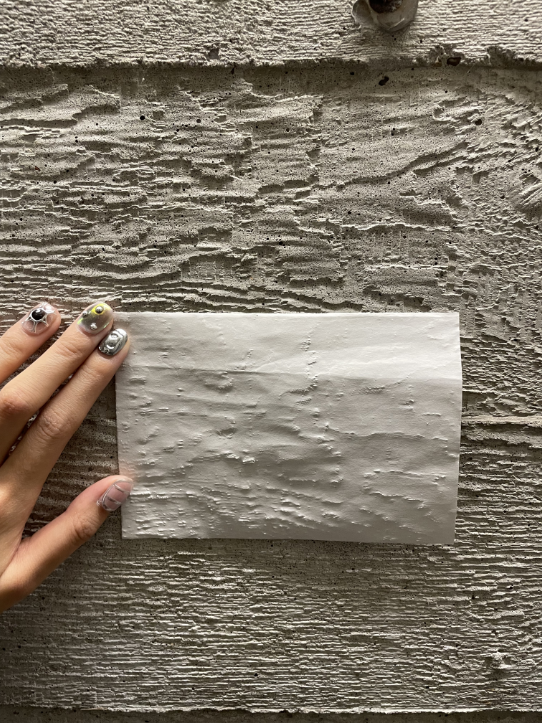
I used a roller to press and drag, imprinting the raised textures onto soft paper.
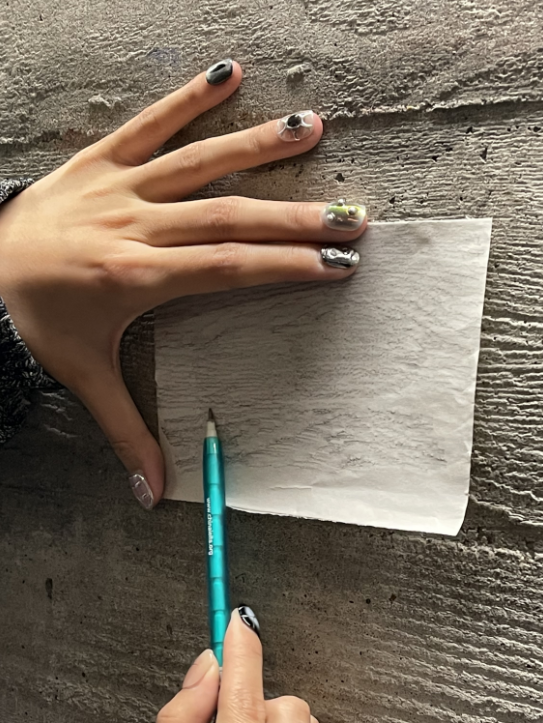
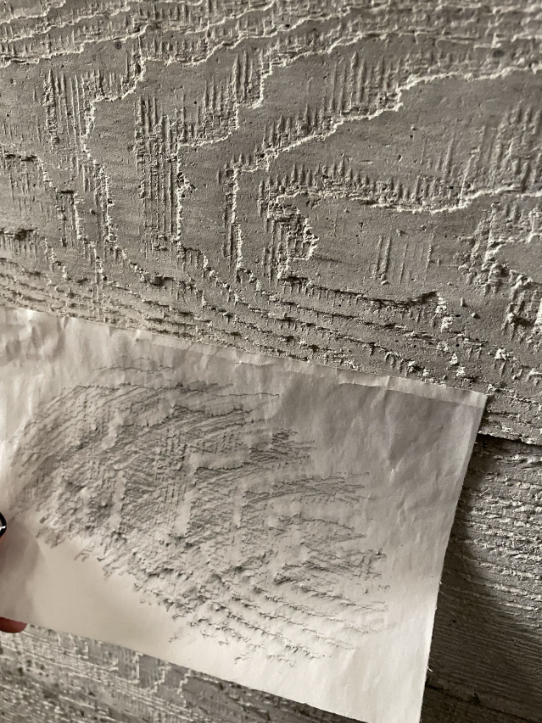
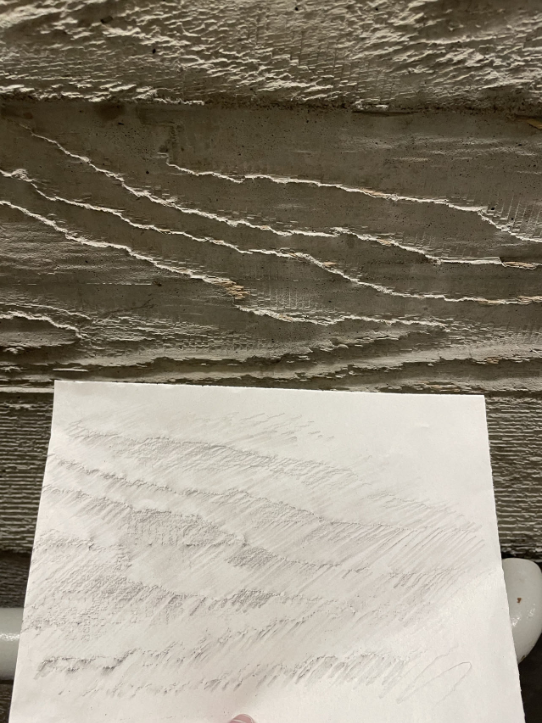
Another way is to rub the side of the pencil on the paper.
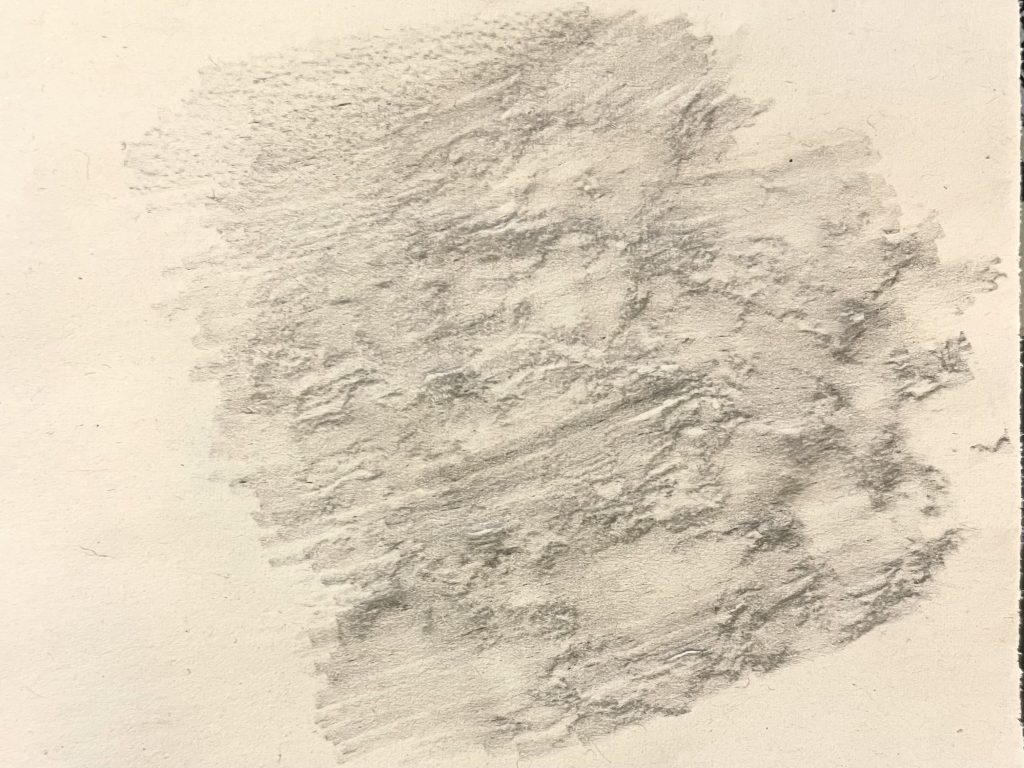
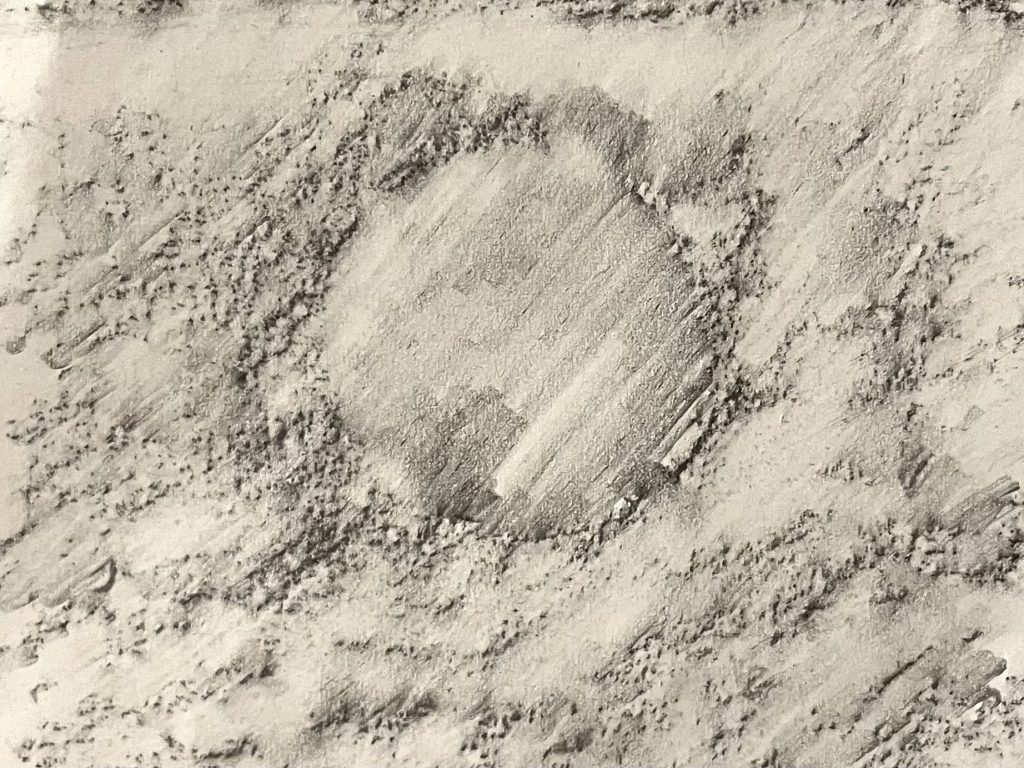
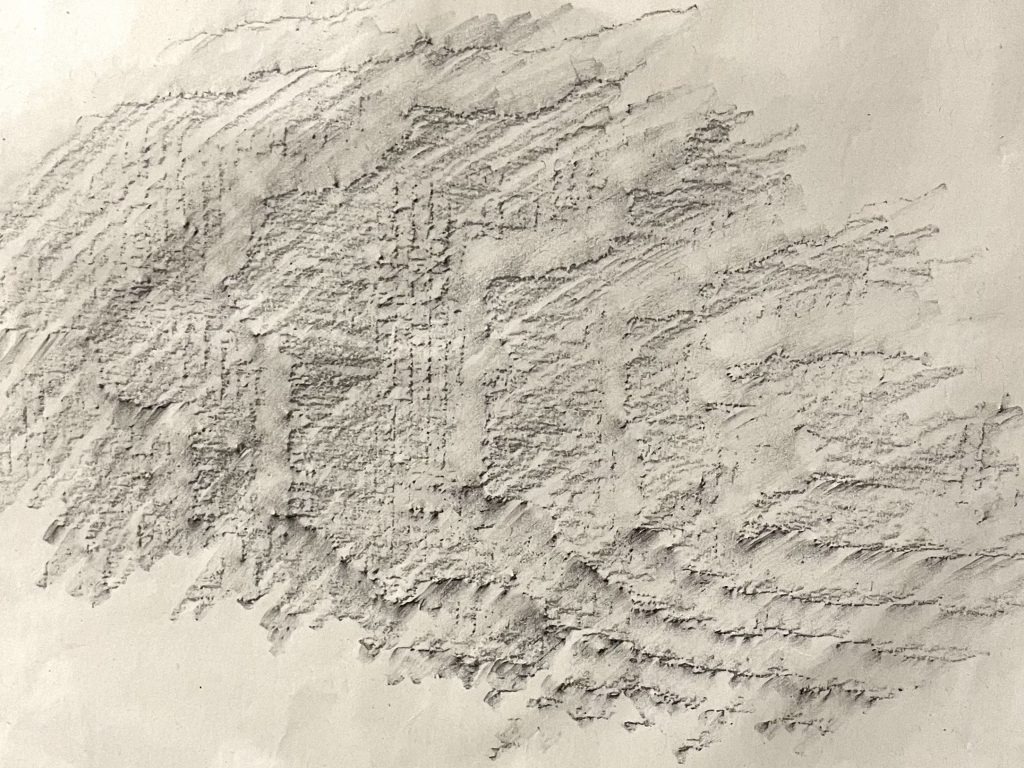
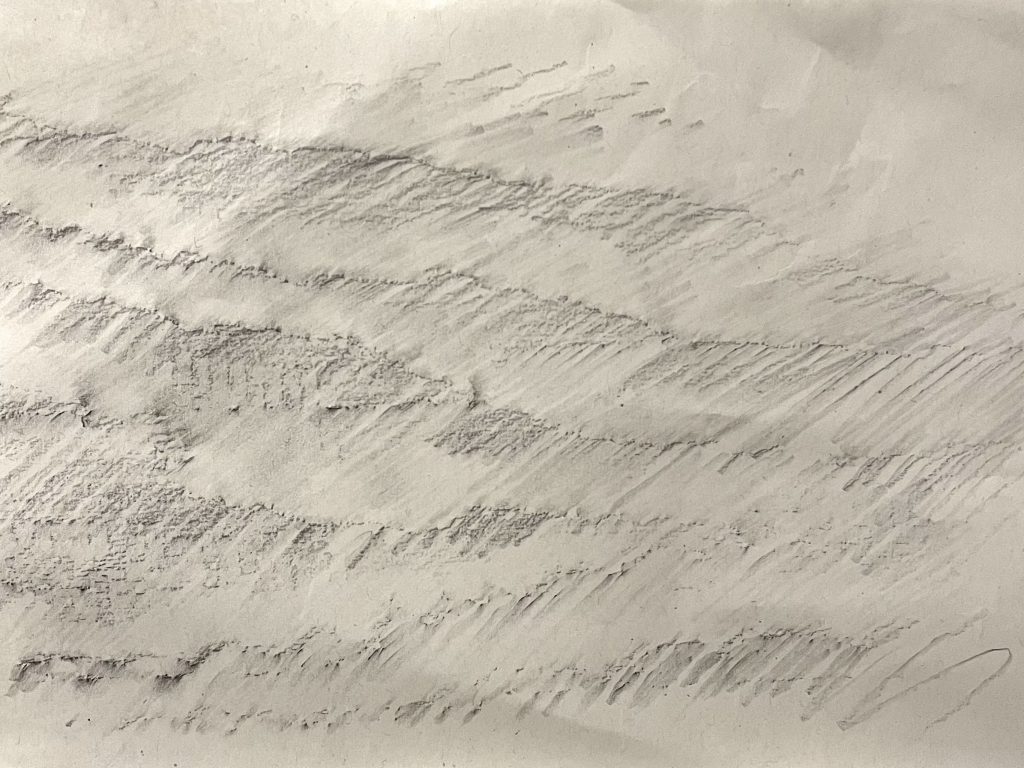
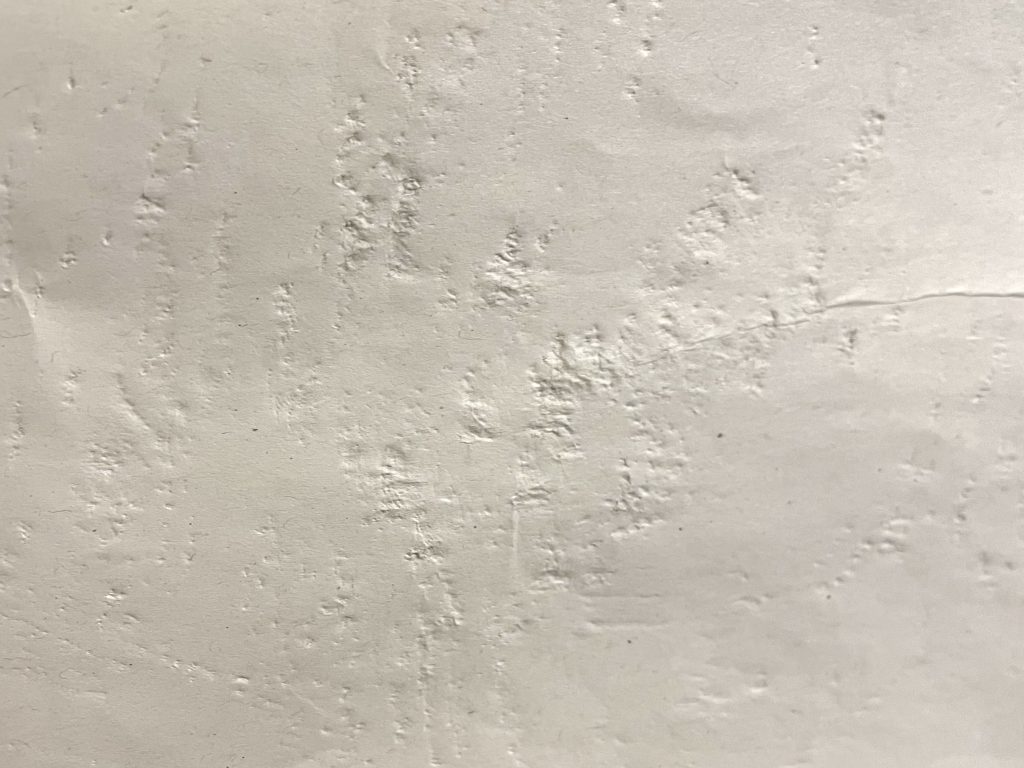
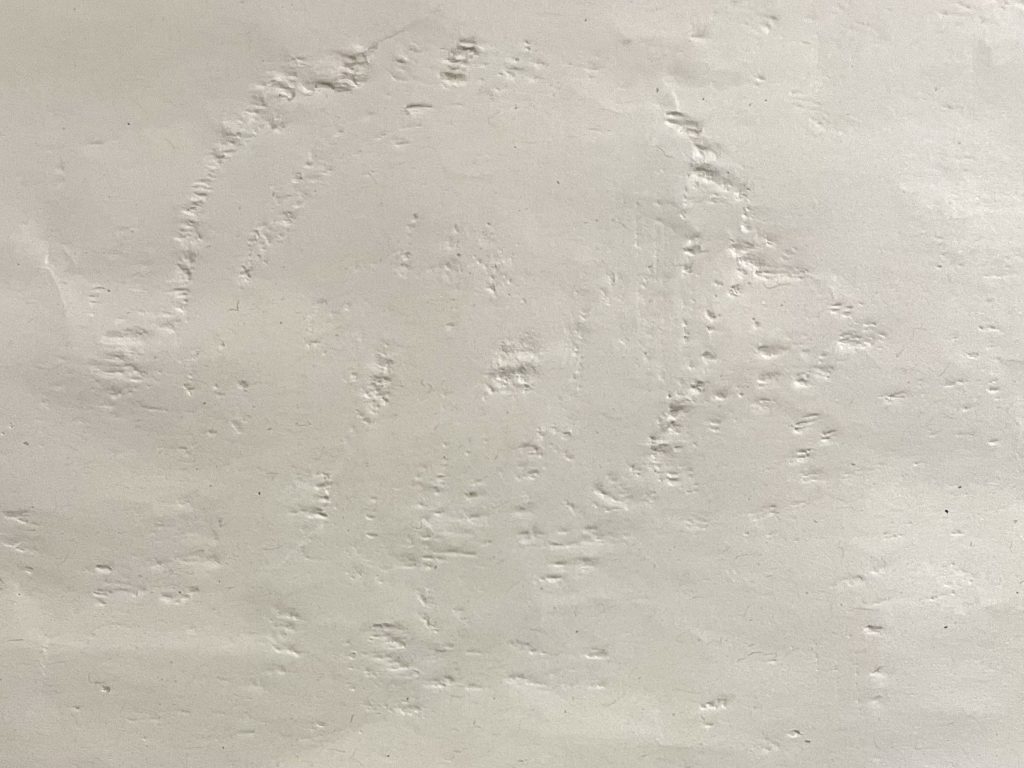
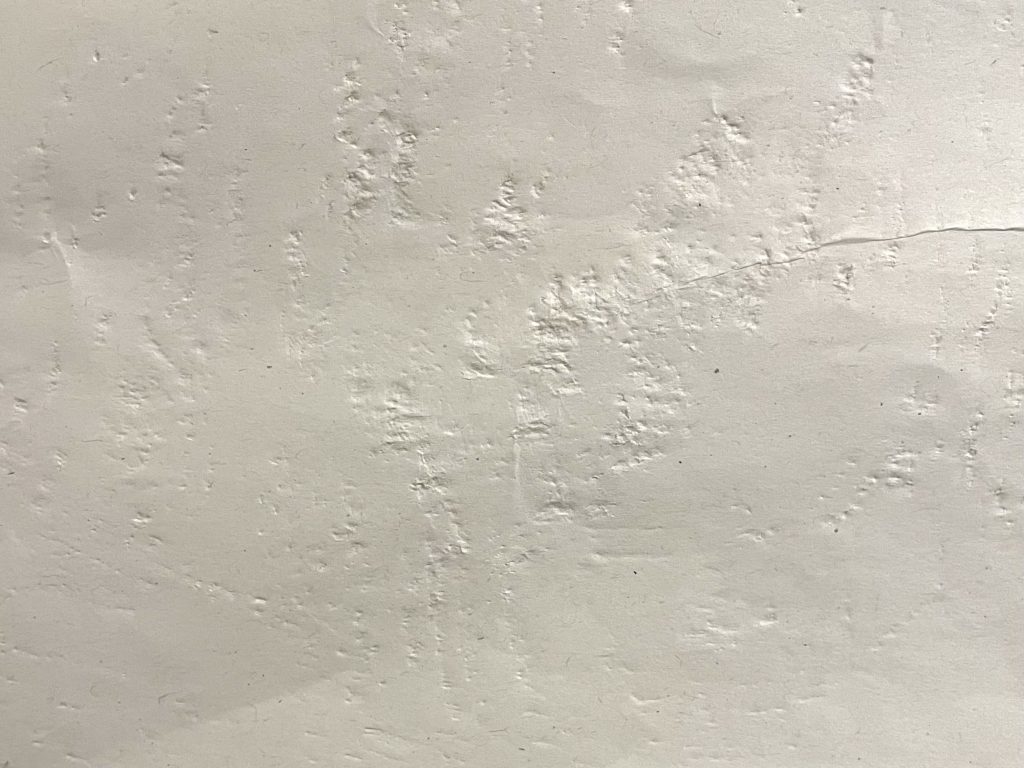
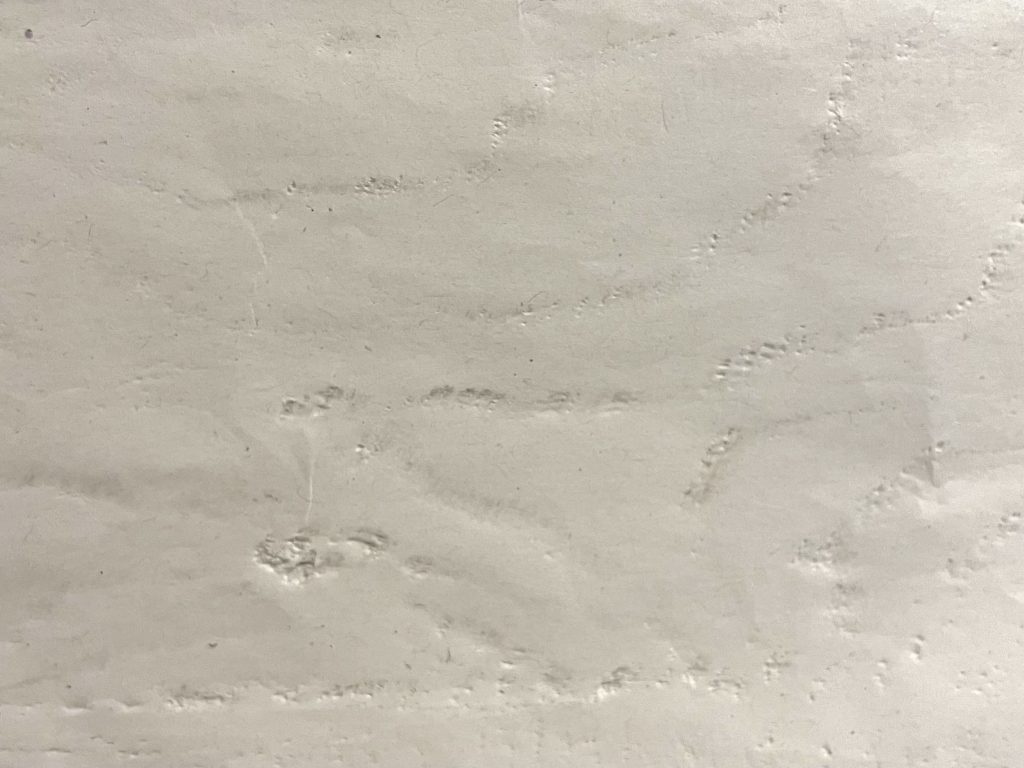
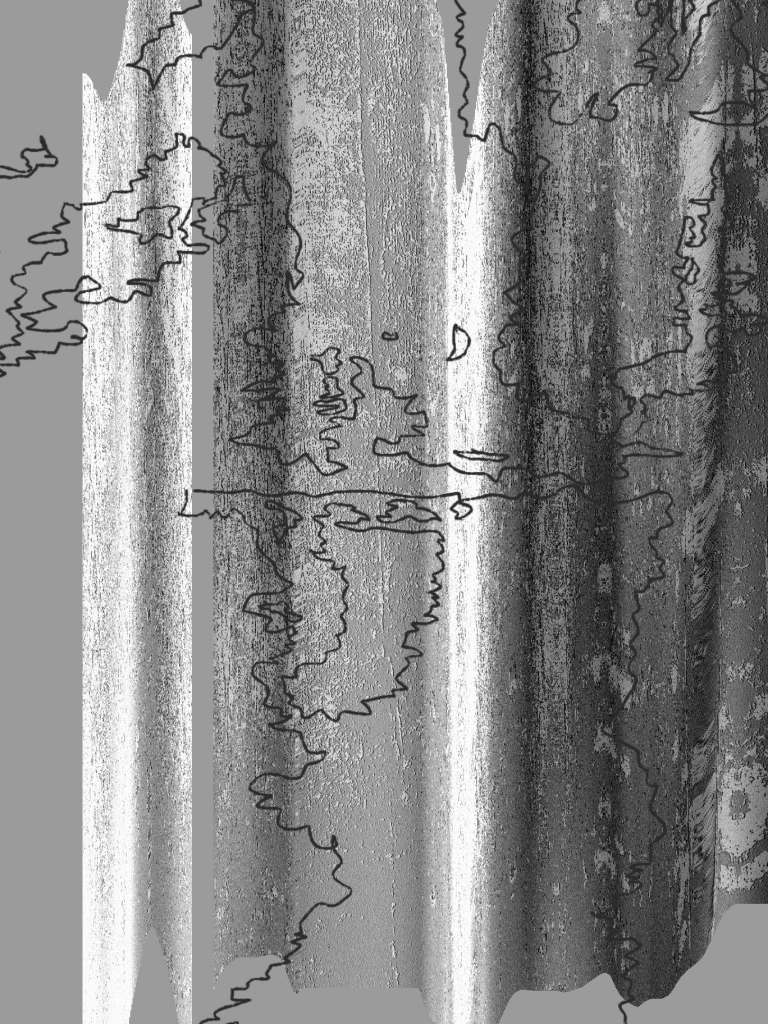
In addition, I traced the outer contours of the stains on the wall, aiming to showcase the fluidity they contain, as if they were flowing and spreading across the surface.
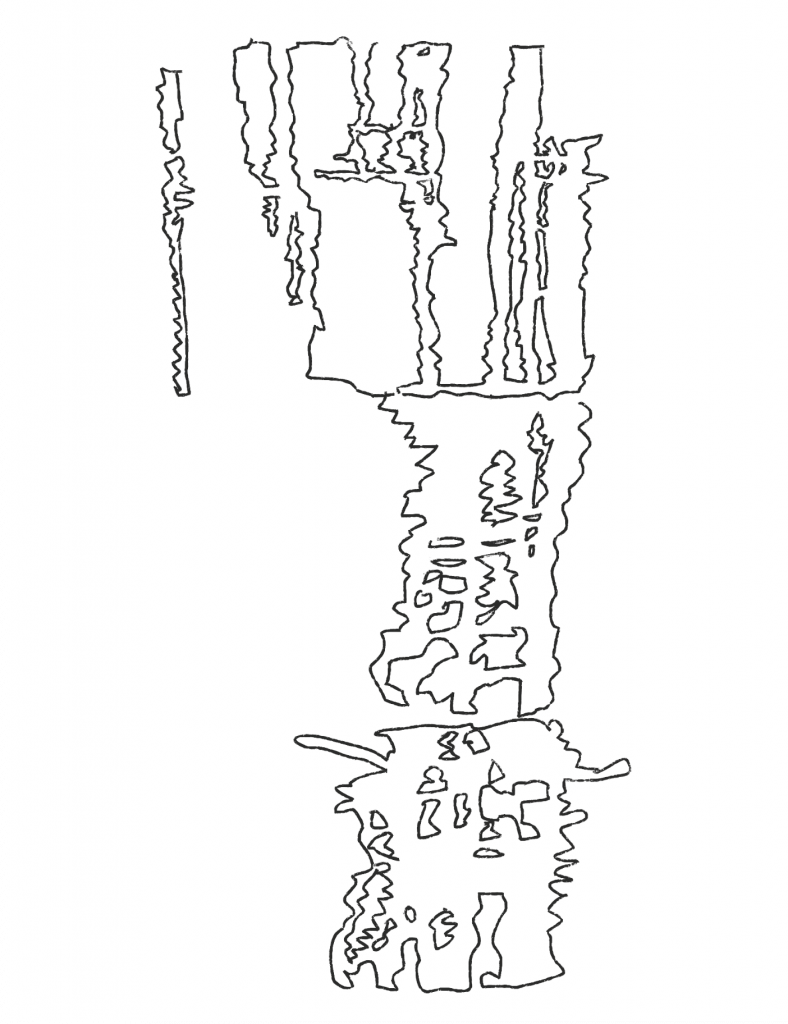
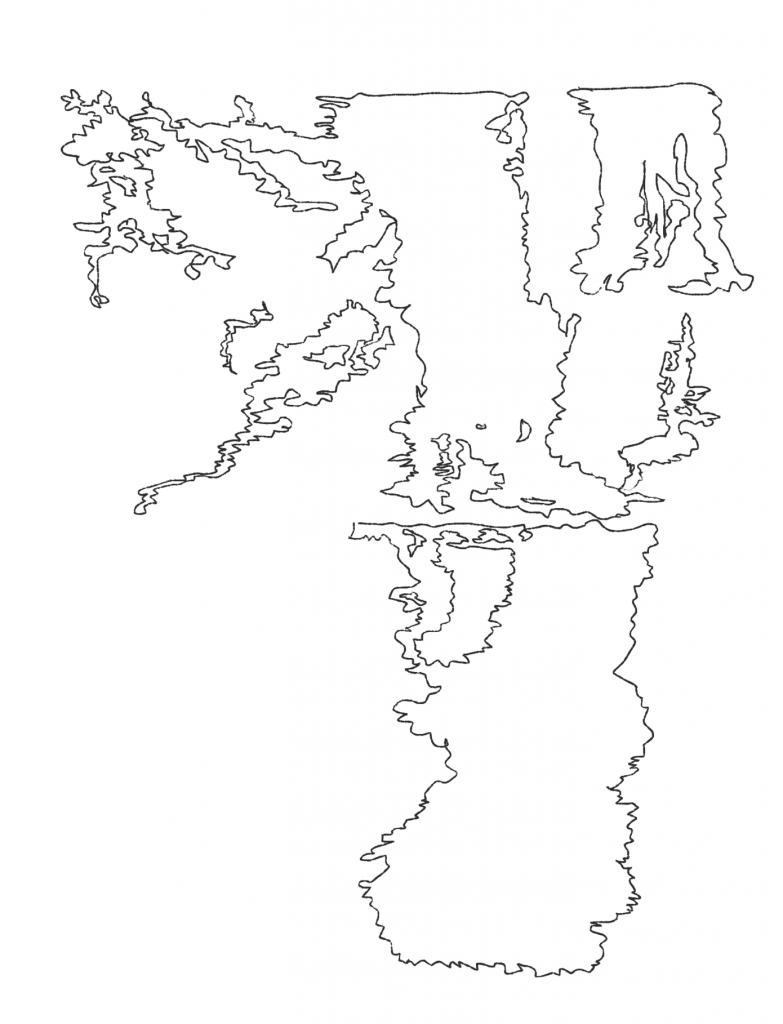
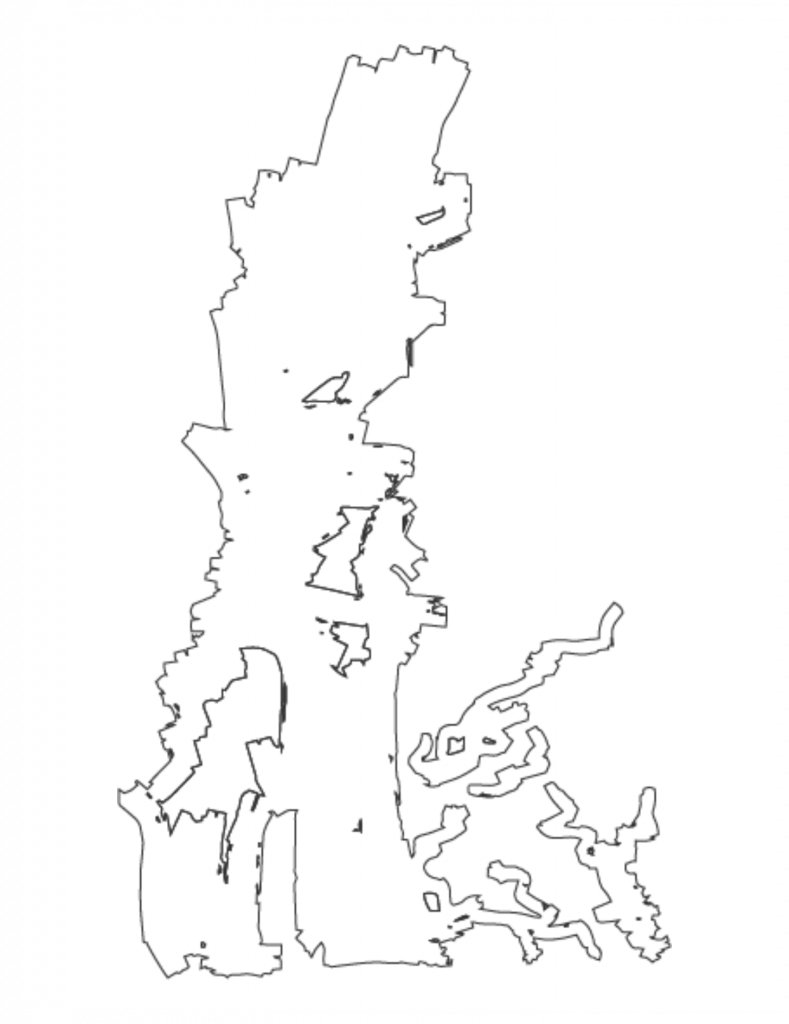
I digitally processed the interweaving of these human and non-human traces, converting them into symbolic graphics through scanning and software editing. By enlarging and refining these traces, I was able to closely examine their structure and patterns of change, revealing the complex relationships of their coexistence in the space.